

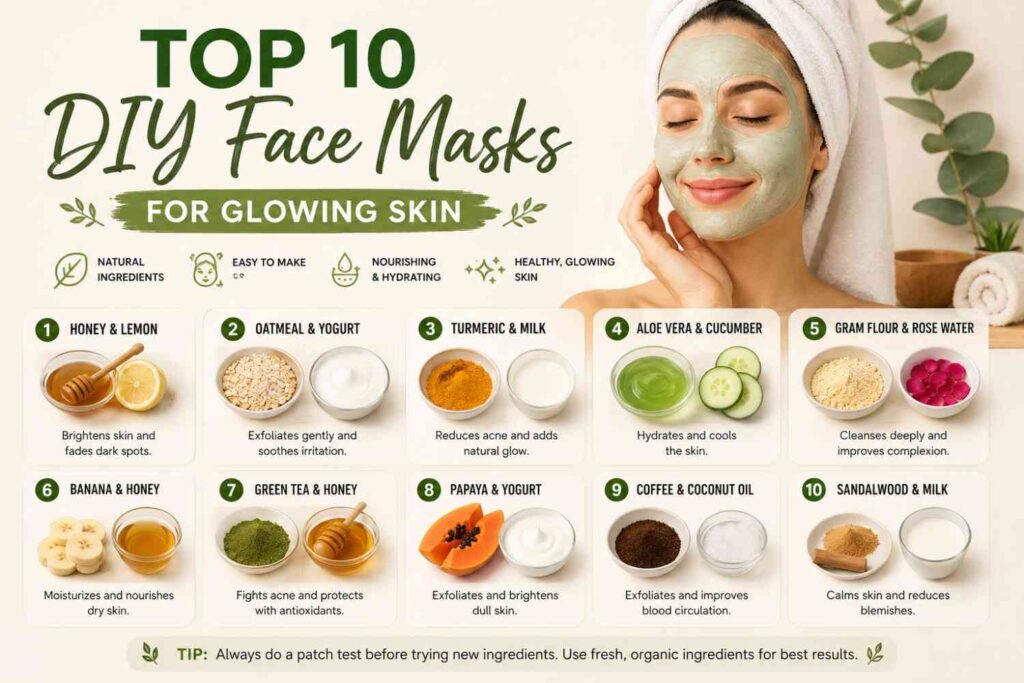
Top 10 DIY Face Masks for Glowing Skin
Achieving naturally glowing skin is a goal shared by many people, but it does not always require expensive skincare products or professional treatments. In fact, some of the most effective skincare ingredients can be found right in your kitchen. Natural ingredients such as honey, yogurt, oatmeal, aloe vera, cucumber, and avocado have been used in beauty routines for generations because of their ability to support skin hydration, nourishment, and overall skin health.
The popularity of DIY face masks continues to grow as more people seek affordable and customizable skincare solutions. Unlike many commercial products that contain long ingredient lists, homemade face masks allow you to know exactly what you are applying to your skin. This level of control is particularly appealing to individuals who prefer natural skincare approaches or want to avoid unnecessary additives.
The Top 10 DIY Face Masks for Glowing Skin featured in this guide combine simple ingredients with practical application methods. Each recipe is designed to support healthy-looking skin while addressing common concerns such as dryness, dullness, uneven texture, and lack of hydration. While these masks are not intended to replace professional skincare treatments, they can be valuable additions to a balanced skincare routine.
In this comprehensive guide, you’ll learn the benefits of DIY face masks, how different ingredients work, which masks are best for various skin types, and how to use them safely for optimal results.
| Topic | Key Information | Best Example from Article | Primary Benefit |
|---|---|---|---|
| Natural Ingredients | Honey, turmeric, yogurt, aloe vera, avocado, oatmeal | Honey & Turmeric Mask | Skin brightening + hydration |
| Application Time | Most masks are applied for 10–20 minutes | Aloe Vera & Cucumber Mask | Safe absorption of nutrients |
| Usage Frequency | 1–2 times per week recommended | All DIY masks | Prevents irritation and overuse |
| Skin Type Suitability | Different masks suit different skin types (dry, oily, sensitive) | Avocado mask (dry skin), Tomato mask (oily skin) | Targeted skincare results |
| Immediate Effect | Temporary glow, softness, and refreshment after use | Milk & Oatmeal Mask | Quick skin refresh |
| Long-Term Effect | Improved texture with consistent use | Yogurt & Honey Mask | Healthier-looking skin over time |
| Safety Requirement | Patch testing is essential before use | All natural ingredients | Prevents allergic reactions |
| Exfoliation Source | Natural acids and enzymes (yogurt, papaya, milk) | Papaya Mask | Gentle removal of dead skin |
| Hydration Boost | Ingredients that lock moisture into skin | Honey, avocado, aloe vera | Softer, smoother skin |
| Anti-dullness Effect | Ingredients that improve radiance | Turmeric, green tea, tomato | Brighter complexion |
Why DIY Face Masks Are Popular for Natural Skincare
Homemade face masks have become increasingly popular among skincare enthusiasts because they provide a simple and accessible way to care for the skin using natural ingredients. As consumers become more aware of what goes into their skincare products, many are choosing DIY alternatives that offer transparency, affordability, and customization. Unlike mass-produced products, homemade masks allow individuals to tailor ingredients to their unique skin concerns and preferences.
Another reason for their popularity is convenience. Most DIY face masks require only a few ingredients that are commonly available in kitchens or local grocery stores. This makes them a practical option for people who want to enhance their skincare routine without spending a significant amount of money. Whether someone is dealing with dry skin, oily skin, or occasional dullness, there are numerous ingredient combinations that can be adapted to meet specific needs.
Additionally, creating a face mask at home can be a relaxing self-care activity. Taking time to prepare and apply a face mask encourages mindfulness and provides an opportunity to unwind from daily stress. Since stress can influence the appearance of the skin, incorporating self-care practices into a skincare routine may contribute to a healthier-looking complexion over time.
While DIY face masks should not be viewed as replacements for medical skincare treatments, they can be useful supportive tools. When used responsibly and consistently alongside cleansing, moisturizing, and sun protection, they can help maintain soft, refreshed, and radiant-looking skin.
Benefits of Using Homemade Face Masks
Homemade face masks offer a variety of benefits that make them attractive for people seeking natural skincare options. One of the most notable advantages is affordability. Many ingredients used in DIY face masks are inexpensive and already available at home, making them accessible to a wide range of users. This allows individuals to experiment with different formulations without investing heavily in specialized products.
Hydration is another key benefit. Ingredients such as honey, aloe vera, avocado, and yogurt are often chosen because they help support moisture retention and leave the skin feeling softer. Proper hydration is essential for maintaining a smooth, healthy-looking complexion and can temporarily reduce the appearance of dryness and rough texture.
Many homemade face masks also provide gentle exfoliation. Natural ingredients like yogurt, oatmeal, and papaya contain compounds that can help remove dead skin cells from the surface of the skin. This process may improve texture and promote a brighter appearance. Because these ingredients are generally milder than some commercial exfoliants, they can be suitable for occasional use in many skincare routines.
Beyond physical benefits, DIY face masks encourage self-care and relaxation. Taking a few minutes to focus on skincare can be a calming experience that supports overall well-being. Although homemade masks are not miracle solutions, they can contribute to healthier-looking skin when combined with a consistent skincare routine and healthy lifestyle habits.
Understanding Realistic Expectations
While DIY face masks can improve the appearance of the skin, it is important to understand their limitations. Many online beauty trends promote homemade remedies as instant solutions for complex skin concerns, but glowing skin typically results from a combination of consistent skincare practices, healthy lifestyle choices, and proper skin protection.
Homemade face masks can help support hydration, provide temporary softness, and contribute to a refreshed appearance. However, they are unlikely to permanently eliminate wrinkles, treat severe acne, or remove deep pigmentation issues. These concerns often require specialized skincare ingredients, professional treatments, or guidance from a qualified dermatologist.
One common misconception is that natural ingredients are automatically safer or more effective than professionally formulated products. While many natural ingredients offer beneficial properties, they can still cause irritation or allergic reactions in some individuals. This is why patch testing is always recommended before applying a new ingredient to the entire face.
In my experience, the most successful skincare routines combine realistic expectations with consistency. DIY face masks work best when viewed as supportive treatments rather than miracle cures. Regular cleansing, moisturizing, sunscreen use, adequate hydration, quality sleep, and a nutrient-rich diet remain essential components of healthy skin. When incorporated into this broader approach, homemade face masks can become valuable tools for maintaining a naturally radiant complexion.
Top 10 DIY Face Masks for Glowing Skin Recipes
When it comes to achieving glowing skin naturally, choosing the right ingredients is just as important as applying the mask correctly. The following DIY face masks are among the most popular and widely used options because they combine ingredients known for their moisturizing, soothing, and skin-refreshing properties. These recipes are simple to prepare, require minimal equipment, and can easily be incorporated into a weekly skincare routine.
Each mask offers unique benefits depending on the ingredients used. Some focus primarily on hydration, while others help gently exfoliate the skin or provide antioxidant support. It is important to remember that every person’s skin is different, so results may vary based on skin type, sensitivity levels, and consistency of use.
Before applying any mask, begin with a clean face to help ingredients contact the skin more effectively. After removing the mask, follow up with a gentle moisturizer to help maintain hydration. Most DIY face masks are best used once or twice per week rather than daily.
The first three recipes below are among the most beginner-friendly options and are often recommended for individuals looking to improve skin softness, hydration, and overall radiance without complicated ingredients or preparation methods.
1. Honey and Turmeric Face Mask
The honey and turmeric face mask is one of the most popular homemade skincare treatments because it combines two ingredients that have been used in beauty traditions for centuries. Honey acts as a natural humectant, meaning it helps attract and retain moisture on the skin’s surface. This can leave the skin feeling softer, smoother, and more hydrated after use.
To prepare this mask, combine one tablespoon of honey with half a teaspoon of turmeric powder. Mix thoroughly until a smooth paste forms. Apply a thin layer to clean skin and leave it on for approximately 10 to 15 minutes before rinsing with lukewarm water.
Many people choose this mask when their skin appears dull or tired. Turmeric is widely recognized for its antioxidant properties and is commonly used in natural skincare routines to promote a brighter-looking complexion. While scientific evidence regarding cosmetic effects is still developing, turmeric remains a popular ingredient in DIY beauty treatments around the world.
Because turmeric may temporarily stain light-colored fabrics and occasionally leave a slight yellow tint on the skin, it is best to use small amounts and rinse thoroughly. With regular use as part of a balanced skincare routine, this mask may help support a refreshed and healthy-looking appearance.
2. Yogurt and Honey Face Mask
The yogurt and honey face mask is a simple yet effective combination that focuses on hydration and gentle exfoliation. Yogurt contains naturally occurring lactic acid, which can help loosen dead skin cells from the skin’s surface, while honey contributes moisture and softness. Together, these ingredients create a soothing treatment suitable for many skin types.
To prepare the mask, mix two tablespoons of plain, unsweetened yogurt with one tablespoon of honey. Stir until the mixture becomes smooth and evenly blended. Apply the mask to clean skin and allow it to sit for approximately 15 minutes before rinsing with lukewarm water.
One of the reasons this mask remains popular is its versatility. It can be used by individuals with normal, dry, or combination skin who want a gentle skincare treatment without harsh ingredients. The mask may leave the skin feeling smoother immediately after use and can contribute to a brighter appearance when incorporated into a regular skincare routine.
For best results, use fresh yogurt without added sugars or artificial flavorings. Following removal, apply a lightweight moisturizer to help lock in hydration. While the effects are temporary, many users appreciate the immediate softness and refreshed feeling that this classic homemade face mask provides.
3. Aloe Vera and Cucumber Face Mask
The aloe vera and cucumber face mask is often recommended for individuals looking for a refreshing and soothing skincare treatment. Both ingredients are widely recognized for their cooling properties, making this mask particularly popular during warmer months or after prolonged sun exposure.
To create the mask, blend a few slices of fresh cucumber with one to two tablespoons of pure aloe vera gel until a smooth consistency is achieved. Apply the mixture evenly to clean skin and leave it on for approximately 15 minutes before rinsing thoroughly.
Cucumber has a high water content, which contributes to the mask’s refreshing sensation. Aloe vera, meanwhile, is frequently used in skincare products because of its soothing and moisturizing qualities. Together, these ingredients create a lightweight treatment that can help temporarily improve skin hydration and comfort.
Many people use this mask when their skin feels dry, irritated, or overheated. While it is not a replacement for medical treatments or professional skincare products, it can be a pleasant addition to a self-care routine. Consistent use alongside proper hydration, sun protection, and daily skincare practices may help support a healthier and more radiant complexion over time.
More DIY Face Masks for Different Skin Needs
Not every skincare concern can be addressed with the same ingredients. Some people struggle with dryness and dehydration, while others want to soothe sensitive skin or improve overall skin softness. This is why choosing ingredients based on your skin’s specific needs can help make homemade face masks more effective and enjoyable to use. Fortunately, several natural ingredients offer different benefits that can be incorporated into simple DIY recipes.
The following face masks are particularly useful for individuals looking to nourish, hydrate, and comfort their skin. Ingredients such as oatmeal, banana, and avocado are commonly used because they contain nutrients and moisturizing properties that support healthy-looking skin. Unlike harsh treatments that may strip the skin of its natural oils, these masks focus on maintaining moisture balance and improving skin comfort.
It is important to remember that consistency plays a significant role in skincare. While a single application may leave the skin feeling softer or smoother, long-term improvements generally come from regular use alongside a complete skincare routine. Gentle cleansing, moisturizing, and sun protection remain essential regardless of the face mask chosen.
These next three recipes are especially popular among people with dry, sensitive, or combination skin types and can easily be incorporated into a weekly self-care routine.
4. Oatmeal and Yogurt Face Mask
The oatmeal and yogurt face mask is a favorite among people who prefer gentle skincare treatments. Oatmeal has long been used in skincare because of its soothing properties, while yogurt contributes mild exfoliation through naturally occurring lactic acid. Together, these ingredients create a balanced mask that can help leave the skin feeling calm, smooth, and refreshed.
To prepare this mask, combine two tablespoons of finely ground oatmeal with two tablespoons of plain yogurt. Mix thoroughly until a thick paste forms. Apply the mixture evenly across the face and allow it to remain on the skin for approximately 15 minutes before rinsing with lukewarm water.
One of the main benefits of oatmeal is its ability to provide a comforting sensation on the skin. This makes it a popular ingredient for people who experience occasional dryness or sensitivity. Yogurt helps loosen surface-level dead skin cells, which may contribute to a smoother appearance without the need for harsh scrubs.
Many individuals find that this mask leaves their skin feeling exceptionally soft after use. Because the ingredients are generally mild, it is often recommended for beginners who are exploring DIY skincare for the first time. When used regularly as part of a balanced skincare routine, the oatmeal and yogurt face mask can help support a healthier and more radiant complexion.
5. Banana and Honey Face Mask
The banana and honey face mask is one of the easiest homemade skincare treatments to prepare, yet it remains highly popular because of its moisturizing and nourishing qualities. Bananas contain vitamins, minerals, and natural compounds that contribute to their reputation as beneficial skincare ingredients. When combined with honey, they create a rich mask designed to leave the skin feeling soft and hydrated.
To make this mask, mash one ripe banana until smooth and mix it with one tablespoon of honey. Apply the mixture evenly to clean skin and allow it to sit for approximately 15 to 20 minutes before rinsing thoroughly with lukewarm water.
This mask is particularly popular among individuals with dry or dull-looking skin. The creamy texture helps create a comfortable application experience, while the natural moisture content of the ingredients contributes to a softer skin feel. Many people use this treatment before special occasions when they want their skin to appear refreshed and well-nourished.
Another advantage of this recipe is its simplicity. Because it requires only two common ingredients, it is accessible to almost anyone interested in natural skincare. While the results are temporary, consistent use can help support hydration and improve the overall appearance of the skin when combined with healthy skincare habits.
6. Avocado and Yogurt Face Mask
The avocado and yogurt face mask is a rich, nourishing treatment that focuses on hydration and skin softness. Avocados are known for their healthy fats and nutrient content, making them a popular ingredient in both nutrition and skincare. When paired with yogurt, they create a creamy mask that can help improve skin comfort and hydration.
To prepare this recipe, mash half of a ripe avocado and mix it with two tablespoons of plain yogurt. Stir until a smooth consistency is achieved, then apply the mixture evenly to the face. Leave it on for approximately 15 to 20 minutes before rinsing thoroughly.
Many people choose this mask during colder months when environmental factors can contribute to dryness. The avocado provides a rich texture that helps the skin feel nourished, while yogurt contributes gentle exfoliating properties. Together, these ingredients create a balanced treatment suitable for individuals seeking additional moisture.
Because the mask is rich and creamy, it may be especially beneficial for dry and mature skin types. However, individuals with oily skin can also use it occasionally if additional hydration is needed. As with all DIY face masks, a patch test is recommended before full application. Used consistently, this mask can become a valuable addition to a skincare routine focused on maintaining smooth, healthy-looking skin.
| Category | Key Ingredients | Skin Benefit | Related Masks in Article |
|---|---|---|---|
| Hydration & Moisturizing | Honey, avocado, banana, yogurt | Improves softness and moisture balance | Honey-Turmeric, Avocado-Yogurt, Banana-Honey |
| Brightening & Glow | Turmeric, tomato, papaya, green tea | Enhances radiance and reduces dullness | Turmeric Mask, Papaya Mask, Green Tea Mask |
| Soothing & Calming | Aloe vera, cucumber, oatmeal | Reduces irritation and calms skin | Aloe-Cucumber, Oatmeal-Yogurt |
| Exfoliation (Gentle) | Yogurt, papaya, oatmeal, milk | Removes dead skin cells for smoother skin | Yogurt-Honey, Milk-Oatmeal |
| Oil Control | Tomato, cucumber, green tea | Helps balance excess oil | Tomato Mask, Green Tea Mask |
| Anti-oxidant Support | Turmeric, green tea, honey | Protects skin from environmental stress | Turmeric Mask, Green Tea Mask |
DIY Face Masks for Brightening and Refreshing Skin
Many people turn to DIY face masks when they want their skin to appear brighter, fresher, and more energized. Environmental stressors, lack of sleep, dehydration, and daily exposure to pollutants can sometimes leave the skin looking dull and tired. While homemade face masks cannot completely transform the skin overnight, certain ingredients may help improve the appearance of the complexion by providing hydration, gentle exfoliation, and antioxidant support.
Ingredients such as green tea, papaya, and tomato have become popular in natural skincare because they contain compounds that contribute to their refreshing reputation. These ingredients are often combined with moisturizing elements like honey to create balanced masks that support overall skin health without being overly harsh.
When using brightening-focused face masks, moderation is important. Overusing exfoliating ingredients can sometimes lead to irritation rather than improvement. Most people achieve the best results by incorporating these treatments into their skincare routine once or twice per week.
The following recipes are frequently chosen by individuals who want a more refreshed and revitalized appearance. While results vary depending on skin type and overall skincare habits, these masks can provide a pleasant addition to a self-care routine focused on healthy-looking skin.
7. Green Tea and Honey Face Mask
The green tea and honey face mask combines two ingredients that are widely recognized in both wellness and skincare communities. Green tea contains antioxidant compounds that help protect against environmental stressors, while honey contributes hydration and softness. Together, they create a simple yet effective homemade treatment.
To prepare this mask, brew a cup of green tea and allow it to cool completely. Mix a small amount of the cooled tea leaves with one tablespoon of honey to form a spreadable paste. Apply the mixture to clean skin and leave it on for approximately 15 minutes before rinsing thoroughly.
Many people enjoy this mask because of the refreshing feeling it provides. Green tea has become a popular ingredient in numerous skincare products due to its antioxidant content, while honey helps balance the mixture by providing moisture. The combination leaves the skin feeling clean, comfortable, and refreshed.
This mask is suitable for most skin types and can be particularly appealing for those seeking a gentle treatment that does not rely on aggressive exfoliation. Although the results are temporary, regular use may contribute to a healthier-looking complexion when combined with proper skincare practices and sun protection.
8. Papaya Face Mask
Papaya is a tropical fruit that has earned a strong reputation in natural skincare because it contains enzymes that help gently exfoliate the skin. These enzymes assist in removing dead skin cells from the surface, which can contribute to a smoother and brighter appearance over time.
Creating a papaya face mask is simple. Mash several pieces of ripe papaya into a smooth paste and apply the mixture evenly to clean skin. Allow it to remain on the face for approximately 10 to 15 minutes before rinsing with lukewarm water.
One reason this mask is so popular is its lightweight texture. Unlike heavier moisturizing masks, papaya feels refreshing and easy to wear. Many users report that their skin feels smoother and appears more vibrant immediately after application. Because of its natural exfoliating properties, the mask is often chosen by individuals who want to address dullness without using harsh scrubs.
However, those with sensitive skin should use caution and perform a patch test before applying papaya to the entire face. While generally well tolerated, the enzymes may be too active for some individuals. Used appropriately, a papaya face mask can be a valuable addition to a skincare routine focused on achieving a brighter and healthier-looking complexion.
9. Tomato and Honey Face Mask
The tomato and honey face mask is frequently recommended in DIY skincare communities because it combines refreshing and moisturizing ingredients in a simple recipe. Tomatoes contain naturally occurring vitamins and antioxidants, while honey helps provide hydration and softness.
To prepare this mask, blend or mash fresh tomato pulp and mix it with one tablespoon of honey. Apply the mixture evenly across the face and leave it on for approximately 10 to 15 minutes before rinsing thoroughly with lukewarm water.
Many people choose this mask when their skin appears dull or tired. The lightweight consistency provides a refreshing sensation, while honey helps prevent the mixture from feeling overly drying. This balance makes the recipe appealing for individuals with oily or combination skin types.
As with any DIY treatment, results vary from person to person. Some individuals notice a temporary improvement in skin brightness and smoothness after application, while others appreciate the refreshing feeling the mask provides. Although it should not be considered a replacement for professional skincare products, the tomato and honey face mask can be a simple and affordable addition to a broader skincare routine designed to maintain healthy-looking skin.
The Final DIY Mask for an Instant Glow
While every face mask in this guide offers unique benefits, the milk and oatmeal face mask is often considered one of the most balanced options for achieving a quick, refreshed appearance. It combines gentle exfoliation with hydration, making it suitable for a wide variety of skin types. The ingredients are simple, affordable, and commonly available in most households, making this recipe an excellent choice for beginners and experienced skincare enthusiasts alike.
What makes this mask particularly appealing is its versatility. Oatmeal helps remove surface impurities and dead skin cells without being overly abrasive, while milk contributes moisturizing properties that can leave the skin feeling soft and smooth. Together, these ingredients create a treatment that supports a brighter-looking complexion without relying on harsh exfoliants or complicated formulations.
Many people use this mask before special occasions when they want their skin to appear more refreshed and well-rested. Although the results are temporary, the combination of hydration and gentle exfoliation can help improve the overall appearance of the skin. When incorporated into a consistent skincare routine, this mask may contribute to smoother texture and improved skin comfort over time.
Like all DIY skincare treatments, it works best when combined with healthy skincare habits such as cleansing, moisturizing, and daily sun protection. Consistency and realistic expectations remain essential for achieving long-term skincare goals.
10. Milk and Oatmeal Face Mask
The milk and oatmeal face mask is a classic homemade skincare treatment that focuses on gentle exfoliation and hydration. Oatmeal has long been valued in skincare for its soothing qualities, while milk contains naturally occurring compounds that can help soften the skin’s surface. Together, they create a simple yet effective mask that leaves the skin feeling refreshed and comfortable.
To prepare the mask, mix two tablespoons of finely ground oatmeal with two tablespoons of milk until a thick paste forms. Apply the mixture evenly across clean skin and leave it on for approximately 15 minutes. Once the mask begins to dry, gently massage the skin in circular motions before rinsing thoroughly with lukewarm water.
Many users appreciate this mask because it provides multiple benefits in a single treatment. The oatmeal helps remove surface debris and excess oil, while the milk contributes moisture that can improve skin softness. This balanced approach makes the mask suitable for individuals who want both hydration and gentle exfoliation.
Because the ingredients are generally mild, the milk and oatmeal face mask can be incorporated into a weekly skincare routine without excessive irritation. Regular use may help support smoother skin texture and a healthier-looking complexion when combined with proper skincare practices.
Comparison Table of DIY Face Masks
Choosing the right face mask often depends on your specific skin concerns and goals. While all of the recipes discussed in this article can contribute to a refreshed appearance, each one offers slightly different benefits. Some focus primarily on hydration, while others emphasize gentle exfoliation, soothing effects, or antioxidant support.
For example, the honey and turmeric face mask is frequently chosen by individuals looking for a brighter-looking complexion, while the aloe vera and cucumber mask is often preferred for its cooling and comforting properties. Similarly, the avocado and yogurt mask is ideal for those seeking additional nourishment, particularly during dry weather conditions.
The comparison table serves as a quick reference guide for selecting the most appropriate mask based on skin type and desired outcome. Rather than trying every mask at once, it is often best to start with one recipe and evaluate how your skin responds. This approach reduces the risk of irritation and makes it easier to identify which ingredients work best for your individual needs.
Remember that no single face mask is universally perfect for everyone. Skin type, sensitivity, environmental factors, and overall skincare habits all influence results. Experimenting carefully and consistently can help you discover the most effective DIY skincare solutions for your unique complexion.
Safety Tips Before Using DIY Face Masks
Although DIY face masks use natural ingredients, safety should always remain a priority. A common misconception is that natural ingredients are automatically safe for every skin type. In reality, even ingredients commonly found in kitchens can trigger irritation, allergic reactions, or sensitivity in some individuals. Understanding how to use homemade face masks responsibly can help maximize benefits while minimizing potential risks.
Before introducing any new ingredient into your skincare routine, it is important to evaluate how your skin reacts. Individual sensitivities vary significantly, and ingredients that work well for one person may not be suitable for another. Taking a cautious approach helps reduce the likelihood of discomfort or unwanted reactions.
Proper preparation is equally important. Using fresh ingredients, clean tools, and hygienic application methods helps prevent contamination that could negatively affect the skin. Since homemade face masks do not contain preservatives like commercial products, they should generally be prepared fresh and discarded after use.
Always Perform a Patch Test
One of the most important steps before trying any new face mask is performing a patch test. This simple precaution helps identify potential allergic reactions or sensitivities before applying ingredients to the entire face. Even ingredients that are generally considered gentle can cause irritation in certain individuals.
To perform a patch test, apply a small amount of the prepared mask to the inside of your wrist or behind your ear. Leave it in place for the recommended amount of time and observe the area for the next 24 hours. If redness, itching, burning, or swelling develops, avoid using the product on your face.
Patch testing is especially important when using ingredients such as turmeric, papaya, tomato, essential oils, or other active natural compounds. These ingredients may affect people differently depending on skin sensitivity levels.
Avoid Harsh Ingredients
Not every ingredient commonly recommended online is suitable for facial skincare. Some DIY beauty trends encourage the use of ingredients that can potentially damage the skin barrier or cause irritation.
For example, undiluted lemon juice may increase sensitivity and irritation, while baking soda can disrupt the skin’s natural pH balance. Strong essential oils may also cause irritation if not properly diluted.
Instead, focus on gentler options such as oatmeal, aloe vera, yogurt, cucumber, honey, and avocado. These ingredients are widely used in skincare because of their soothing and moisturizing properties.
If an ingredient causes burning, redness, or discomfort, discontinue use immediately. Healthy skin responds best to gentle and consistent care rather than harsh treatments.
Follow Proper Hygiene
Maintaining proper hygiene is essential when preparing and applying homemade face masks. Always wash your hands before handling ingredients and use clean bowls and utensils.
Fresh masks should be used immediately and not stored for later use, as DIY mixtures can easily become contaminated. The face should also be cleansed before application to remove dirt, oil, and makeup.
After use, rinse thoroughly and pat the skin dry with a clean towel. Good hygiene reduces the risk of irritation and helps maintain healthy skin.
How to Get Better Results from DIY Face Masks
DIY face masks can improve skin appearance, but lasting results require consistency and a complete skincare routine. Cleansing, moisturizing, hydration, nutrition, and sun protection all play essential roles in skin health.
Face masks should be used as supportive treatments rather than standalone solutions. Most people benefit from using them once or twice per week depending on skin type and ingredient strength.
Maintain a Consistent Routine
Consistency is key in skincare. Regular use of suitable face masks helps support gradual improvements in skin texture and appearance over time.
Overuse, especially of exfoliating masks, may lead to irritation. A balanced routine is more effective than frequent intensive treatments.
Most people see better results when they stick to a predictable weekly schedule and allow their skin time to respond.
Stay Hydrated and Protect Your Skin
Hydration and sun protection are essential for maintaining healthy-looking skin. Drinking water supports overall skin function, while sunscreen helps protect against UV damage.
Daily sunscreen use with SPF 30 or higher is recommended, even on cloudy days. This helps prevent premature aging and uneven skin tone.
Combine Masks with Gentle Skincare
DIY face masks work best when combined with a simple skincare routine that includes cleansing, moisturizing, and sunscreen.
Avoid combining multiple strong treatments at once, as this may increase irritation. A balanced approach ensures better long-term skin health and comfort.
Frequently Asked Questions About Top 10 DIY Face Masks for Glowing Skin
When exploring homemade skincare treatments, many people have questions about effectiveness, safety, and how to choose the right ingredients. The following FAQs address some of the most common concerns related to DIY face masks and glowing skin. These answers are designed to help both beginners and experienced skincare enthusiasts make informed decisions while building a safe and effective skincare routine.
Which homemade face mask is best for glowing skin?
There is no single face mask that works best for everyone because skin types and concerns vary from person to person. However, the honey and turmeric face mask is often considered one of the most popular options for promoting a brighter-looking complexion. Honey helps support skin hydration, while turmeric is widely used in natural skincare for its antioxidant properties.
Individuals with dry skin may prefer avocado and yogurt or banana and honey masks because they provide additional moisture. Those with oily or combination skin often enjoy cucumber-based or tomato-based masks because of their lightweight feel. The most effective approach is to choose ingredients that align with your skin’s specific needs and use them consistently as part of a broader skincare routine.
How often should I use DIY face masks?
Most skincare experts recommend using homemade face masks one to two times per week. This frequency allows the skin to benefit from hydration, nourishment, and gentle exfoliation without becoming overwhelmed. Applying masks too frequently, particularly those containing exfoliating ingredients, may increase the likelihood of irritation or sensitivity.
The ideal frequency depends on your skin type and the ingredients used. Hydrating masks containing honey, aloe vera, or avocado may be tolerated more often than masks containing naturally exfoliating ingredients such as papaya or yogurt. Observing how your skin responds over time can help determine the best schedule for your individual needs.
Are DIY face masks safe for sensitive skin?
Many DIY face masks can be suitable for sensitive skin when prepared using gentle ingredients. Oatmeal, aloe vera, cucumber, and plain yogurt are commonly chosen because they are generally well tolerated and provide soothing or moisturizing benefits. However, sensitive skin can react unpredictably, so patch testing remains essential before full application.
It is also important to avoid potentially irritating ingredients such as undiluted lemon juice, strong essential oils, or highly acidic mixtures. Starting with simple recipes and monitoring skin reactions can help reduce the risk of discomfort. Individuals with severe skin sensitivities or medical skin conditions should consult a dermatologist before experimenting with homemade skincare treatments.
Can I use kitchen ingredients on my face every day?
Not all kitchen ingredients are appropriate for daily facial use. While some gentle ingredients such as aloe vera or honey may be used more frequently, exfoliating ingredients should generally be limited to occasional treatments. Overuse can disrupt the skin barrier and lead to dryness, redness, or irritation.
A balanced skincare routine is usually more effective than applying multiple DIY treatments every day. Cleansing, moisturizing, and sun protection should remain the foundation of skincare, while face masks serve as supportive treatments used periodically. Choosing ingredients carefully and avoiding excessive application can help maintain healthy-looking skin.
What is the best homemade face mask for glowing skin before an event?
For individuals seeking a quick skin refresh before a special event, a honey, yogurt, and oatmeal combination is often a reliable choice. This type of mask provides hydration, gentle exfoliation, and temporary softness that may help the skin appear smoother and more radiant.
It is generally best to use the mask one day before the event rather than immediately beforehand. This allows time for any mild redness or sensitivity to subside. Additionally, avoiding new ingredients before important occasions reduces the risk of unexpected skin reactions. Combining the mask with proper hydration and a good night’s sleep can further enhance results.
How can I make my face glow naturally?
Natural skin radiance comes from a combination of skincare and lifestyle habits rather than any single product or treatment. Consistent cleansing, moisturizing, and sunscreen use help maintain skin health, while adequate hydration, balanced nutrition, regular exercise, and quality sleep support overall well-being.
DIY face masks can complement these habits by providing additional hydration and nourishment. Ingredients such as honey, aloe vera, avocado, and yogurt are commonly used because they support healthy-looking skin. However, long-term glow is typically achieved through consistency and a holistic approach to skincare rather than quick fixes.
Do natural face masks remove dark spots?
Homemade face masks may help improve the overall appearance of the skin, but they are generally not effective treatments for significant hyperpigmentation or stubborn dark spots. While some ingredients may contribute to a brighter-looking complexion, dark spots often require targeted skincare ingredients or professional treatment.
Individuals concerned about persistent pigmentation should consider consulting a dermatologist or skincare professional. A combination of proper sun protection, evidence-based skincare products, and professional guidance often produces more reliable results than DIY treatments alone. Face masks can still support overall skin health but should not be viewed as complete solutions for pigmentation concerns.
Conclusion
The Top 10 DIY Face Masks for Glowing Skin demonstrate that effective skincare does not always require expensive products or complicated routines. Simple ingredients such as honey, turmeric, yogurt, oatmeal, aloe vera, cucumber, banana, avocado, green tea, papaya, tomato, and milk can all play a role in supporting healthier-looking skin when used thoughtfully and consistently.
Throughout this guide, we explored a variety of homemade face masks designed to address different skincare needs, from hydration and nourishment to gentle exfoliation and refreshing care. Each recipe offers unique benefits, allowing individuals to choose treatments that align with their skin type and personal preferences. Whether you are looking to soothe dry skin, improve skin softness, or simply enjoy a relaxing self-care ritual, DIY face masks can be a valuable addition to your skincare routine.
However, it is important to remember that glowing skin is rarely the result of a single treatment. Long-term skin health depends on a combination of factors, including proper cleansing, regular moisturizing, daily sun protection, healthy nutrition, hydration, and adequate rest. Homemade face masks work best when they complement these essential habits rather than replace them.
By selecting appropriate ingredients, performing patch tests, and maintaining realistic expectations, you can safely enjoy the benefits of natural skincare. With consistency and care, these DIY face masks can help support a smoother, softer, and more radiant complexion over time.