

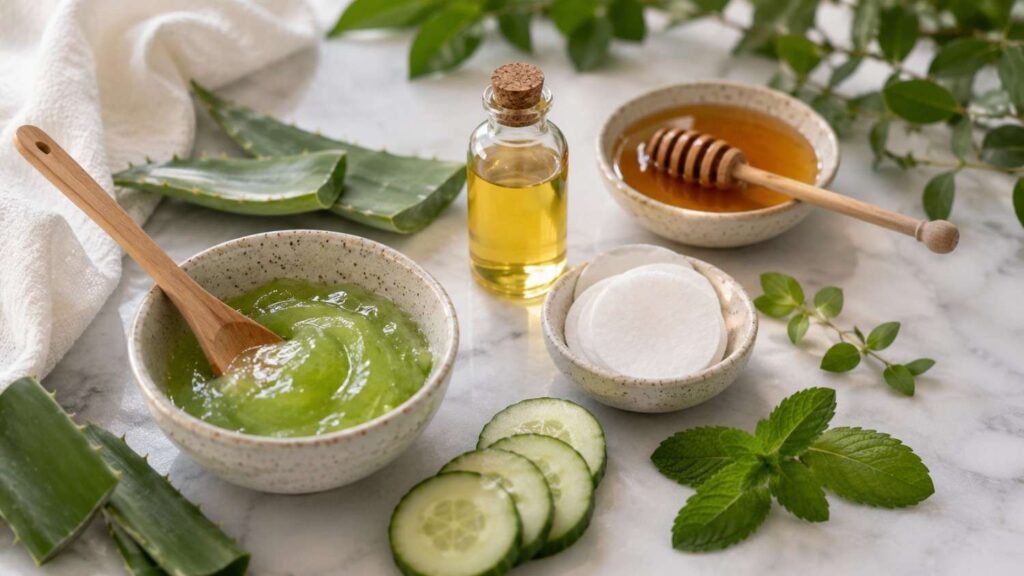
The Best Natural Remedies for Acne: Evidence, Safety, and Realistic Results
Searching for the best natural remedies for acne can quickly lead to contradictory advice. One source recommends essential oils, another promotes restrictive diets, and a third suggests applying household acids directly to inflamed skin. The clinical evidence is far more cautious than many online claims.
Acne is a chronic inflammatory disorder involving the hair follicles and nearby oil glands. Excess sebum, accumulated dead skin cells, bacterial activity within blocked follicles, and inflammation contribute to blackheads, whiteheads, papules, pustules, nodules, and cyst-like lesions. Acne is not simply caused by dirty skin, and scrubbing harder does not remove the blockage beneath the surface.
Research on complementary acne remedies has produced some encouraging findings, particularly for formulated topical tea tree oil and green tea extract. Aloe vera may provide supportive benefits when combined with other treatment. Dietary studies suggest that a low-glycemic eating pattern could help selected individuals. Nevertheless, studies are often small, use different formulas, and measure results inconsistently.
The American Academy of Dermatology’s current acne guideline strongly supports treatments such as benzoyl peroxide and topical retinoids. It found insufficient evidence to make recommendations for plant-based products, vitamins, or dietary changes. This does not mean all natural approaches are useless; it means they should be discussed honestly as complementary options rather than guaranteed cures.
In my experience, the safest framework divides natural acne care into three categories: remedies with limited but promising evidence, habits that protect acne-prone skin, and popular DIY treatments that create more risk than benefit.
This guide explains each category, provides application and patch-testing guidance, and identifies the point at which continuing home care could increase the risk of discoloration or permanent scarring.
What Acne Is and Why Natural Remedies Have Limits
Acne develops within the pilosebaceous unit, which consists of a hair follicle and its associated oil-producing gland. Oil and dead skin cells can accumulate inside the follicle and create a plug. Biological activity involving Cutibacterium acnes and the immune system then contributes to inflammation and different types of lesions.
This process explains why ordinary washing cannot cure acne. Cleansing can remove sweat, makeup, sunscreen, pollutants, and surface oil, but it does not automatically normalize follicular cell turnover, hormonal influences, sebum production, or deeper inflammation.
Natural ingredients also present research challenges. Products labeled tea tree oil may contain different concentrations and supporting ingredients. Aloe gels can be prepared from different parts of the plant. Green tea studies may use extracts that bear little resemblance to brewed tea applied at home.
Clinical trials of complementary acne treatments have often involved small participant groups, short treatment periods, inconsistent product formulations, and different methods of counting lesions. A systematic review of complementary treatments found that these differences limited the generalizability of the evidence and prevented a recommendation for complementary medicine as a group.
A remedy may reduce inflammatory pimples without preventing blackheads. Another may soothe irritation without affecting the biological mechanisms that create acne. These distinctions are often lost in claims that an ingredient “clears skin.”
The responsible position is not that natural remedies never help. It is that selected options may support mild acne care, while the expected benefit, treatment duration, and safety limitations must be explained clearly.
Readers should also confirm that the condition is acne. Rosacea, folliculitis, perioral dermatitis, hidradenitis suppurativa, and contact reactions can produce bumps that require different care. A worsening or uncertain condition should be professionally assessed.
How Acne Develops Beneath the Skin
Acne begins when sebum and dead skin cells accumulate within a follicle. A closed blockage forms a whitehead, while an open blockage forms a blackhead. The dark surface of a blackhead results from material exposed to air; it is not ordinary dirt that can be scrubbed away.
Inflammation can transform a blocked follicle into a red papule or pus-filled pustule. When inflammation develops deeper in the skin, nodules and cyst-like lesions may form. These deeper lesions are more painful and more likely to leave permanent scars or prolonged discoloration.
Hormonal activity, genetics, certain medications, friction, occlusive products, and individual skin characteristics may influence acne. This is why a remedy that helps one person may have little effect on another.
Removing all surface oil is not a useful treatment objective. Over-cleansing can produce tightness, scaling, redness, and discomfort, making it difficult to continue an otherwise appropriate acne treatment.
The first practical step is to identify the lesion pattern. Occasional inflammatory pimples, widespread clogged pores, deep nodules, and bumps caused by another skin condition require different strategies.
Natural remedies are most reasonable for mild acne without scarring. Deeper or persistent inflammation needs more reliable treatment because delayed care may allow additional lesions and permanent marks to develop.
What the Current Evidence Actually Supports
Current evidence does not support any natural ingredient as a universal acne cure. NCCIH reports that a small amount of research suggests topical tea tree oil may help acne, while emphasizing that more evidence is needed before definite conclusions can be reached.
Two small studies cited by NCCIH suggest topical aloe gel may improve acne when combined with other treatments. This supports considering aloe as an adjunct, not as a replacement for treatment that targets blocked pores or deeper inflammation.
A systematic review and meta-analysis found that topical green tea extract appeared to reduce acne lesions without significant adverse effects in the included studies. However, the researchers also noted the limited evidence base, and a broader complementary-medicine review concluded that available data were insufficient for routine recommendations.
Diet research is similarly uncertain. Small studies suggest that low-glycemic eating patterns may improve acne for some people, but findings are not consistent enough for a formal guideline recommendation.
In contrast, the AAD guideline strongly recommends benzoyl peroxide, topical retinoids, and selected combination therapies. These treatments have broader and more consistent clinical support.
Natural approaches should therefore be presented as optional supportive measures for mild acne. They should not delay established treatment when breakouts are painful, extensive, scarring, or resistant to careful home care.
Related Articles
The Best Natural Remedies for Acne With Some Evidence
The remedies below have limited human evidence or credible discussion from medical authorities. None should be promoted as a guaranteed treatment, and each option addresses only part of the biological process involved in acne.
| Remedy or Approach | Evidence Level | Potential Role | Main Safety Concern |
|---|---|---|---|
| Formulated topical tea tree oil | Limited but promising | Mild inflammatory and non-inflammatory acne | Irritation and allergic contact dermatitis |
| Topical aloe vera gel | Limited, mainly as an adjunct | Soothing support alongside treatment | Burning, itching, rash, or eczema |
| Topical green tea extract | Limited | Possible reduction in acne lesions | Product quality and irritation |
| Low-glycemic eating pattern | Mixed but plausible | May reduce breakouts for some people | Unnecessary dietary restriction |
| Gentle acne-friendly skincare | Strong supportive guidance | Protects the skin barrier and improves treatment tolerance | Over-cleansing or unsuitable products |
A professionally formulated topical product is usually safer than a homemade preparation. Commercial formulas can offer controlled ingredient concentrations, preservatives, stability testing, package directions, and an established period of use.
“Professionally formulated” does not mean risk-free. Essential oils, botanical extracts, preservatives, fragrances, and active ingredients may still irritate the skin. Review the complete ingredient list rather than relying on labels such as natural, clean, gentle, or chemical-free.
Introduce only one remedy at a time. This allows you to identify whether redness, itching, dryness, congestion, or improvement is related to the new product.
Patch testing can reveal some irritant or allergic reactions before full facial application, although it cannot guarantee that a product will never clog pores or cause problems with repeated use.
Natural remedies should also be evaluated according to the acne type. A soothing gel may reduce discomfort without clearing blackheads. A product that improves mild inflammatory lesions may not treat deep nodules.
The most useful approach is to select one reasonable option, use it consistently according to directions, maintain gentle skincare, and establish a clear point at which lack of improvement will lead to professional treatment.
Formulated Tea Tree Oil for Mild Acne
Tea tree oil is among the most frequently studied botanical ingredients for acne. NCCIH states that a small amount of evidence suggests topical tea tree oil may help, but the available research is not sufficient for definite conclusions.
A more recent systematic review found promising clinical evidence for tea tree oil in several topical conditions, including acne, while also identifying differences in product quality, formulation, and study design. These limitations make it difficult to define one reliable concentration or expected result for every user.
Choose a finished skincare product intended for acne-prone skin. Do not apply undiluted essential oil directly to the face or create a household dilution by guessing at measurements.
Tea tree oil can produce redness, burning, stinging, scaling, dryness, itching, and allergic reactions. Oxidized or poorly stored oil may be more irritating.
Patch-test the finished formula and avoid applying it around the eyes, lips, open wounds, or already irritated skin. Use additional caution when the routine contains retinoids, exfoliating acids, or benzoyl peroxide.
Tea tree oil must not be swallowed. Oral exposure can cause serious symptoms, including confusion and impaired coordination.
For mild acne, a well-formulated topical product may be a cautious complementary option. Stop immediately if significant irritation develops.
For readers comparing natural options with conventional care, this overview of evidence-based acne remedies provides additional context on treatments commonly recommended for different types of acne.
Aloe Vera and Topical Green Tea
Aloe vera is commonly promoted as an acne remedy because of its soothing reputation. Evidence for aloe alone remains limited. NCCIH reports that two small studies suggested benefit when topical aloe gel was used in combination with other acne treatments.
This distinction matters. Aloe may support comfort or reduce treatment-related irritation without addressing every mechanism involved in blocked follicles and inflammatory acne.
Choose a properly formulated topical gel with a complete ingredient list. Raw aloe leaf material can vary in composition, cleanliness, and preparation, while commercial gels may contain fragrance, alcohol, coloring, or preservatives that affect tolerance.
Topical aloe is usually well tolerated, but burning, itching, rash, and eczema have been reported. Oral aloe latex and whole-leaf products carry different risks and should not be used as acne treatments.
Topical green tea extract also has limited supportive evidence. A systematic review and meta-analysis suggested that topical green tea extract may reduce acne lesions without significant adverse effects in the included trials.
However, brewed tea, used tea bags, and homemade infusions are not equivalent to standardized extracts studied in formulated products. Homemade water-based mixtures may also lack preservatives.
Use a properly manufactured formula, patch-test it, and consider green tea or aloe as supportive options—not replacements for effective treatment when acne is persistent or scarring.
| Natural Remedy | Best For | Scientific Evidence | Time to Notice Results | Suitable for Sensitive Skin |
|---|---|---|---|---|
| Formulated Tea Tree Oil | Mild inflammatory acne | Limited but promising | 6–12 weeks | With patch testing only |
| Aloe Vera Gel | Soothing irritated acne-prone skin | Limited adjunct evidence | 2–6 weeks | Usually yes |
| Topical Green Tea Extract | Reducing inflammation | Limited clinical evidence | 6–8 weeks | Generally yes |
| Low-Glycemic Diet | Supporting long-term acne management | Mixed evidence | Several weeks to months | Yes |
| Gentle Daily Skincare Routine | Maintaining skin barrier and preventing irritation | Strong supportive guidance | Ongoing daily benefit | Yes |
A Balanced Low-Glycemic Eating Pattern
A low-glycemic eating pattern emphasizes foods that tend to produce a slower rise in blood glucose, including many vegetables, beans, minimally processed grains, nuts, and selected fruits. Some small studies have found that participants following a lower-glycemic diet developed fewer acne lesions.
The results are not consistent across all research. The AAD’s current guideline found insufficient evidence to make a formal recommendation for dietary changes as an acne treatment.
Use diet as an observation-based supportive strategy rather than a cure. Keep a simple record of meals and breakouts for several weeks, looking for repeated patterns instead of blaming one isolated food.
The AAD notes an association between cow’s milk and acne in some studies, while yogurt and cheese have not shown the same relationship. An association does not prove that dairy causes acne in every person.
Avoid eliminating entire food groups without considering overall nutrition. Removing dairy, carbohydrates, or fats can affect energy, protein, calcium, vitamin D, and other nutrient intake.
Teenagers, pregnant people, athletes, people with medical conditions, and anyone with a history of disordered eating should seek qualified nutritional guidance before adopting a restrictive plan.
A balanced lower-glycemic pattern may support overall health and could help selected acne patients. It should complement, rather than replace, a consistent skincare and treatment plan.
If you’re interested in how nutrition and everyday habits may influence breakouts, this guide on diet and lifestyle strategies summarizes several research-backed approaches that complement a balanced acne-care routine.
Daily Habits That Support Natural Acne Care
The lowest-risk natural acne strategy is usually a consistent, non-irritating daily routine. Gentle skincare cannot cure every form of acne, but it can reduce avoidable inflammation, support the skin barrier, and improve tolerance of both botanical and conventional treatments.
The AAD recommends gently washing acne-prone skin up to twice daily and after sweating. Washing more frequently, using abrasive tools, or scrubbing with harsh products can increase irritation and make breakouts appear more inflamed.
Use lukewarm water and a mild, non-abrasive cleanser. Apply it with clean fingertips rather than a rough washcloth, cleansing brush, sponge, or grainy scrub.
Follow with an oil-free or non-comedogenic moisturizer when the skin feels dry. Non-comedogenic means that a product is formulated not to clog pores, although no label can guarantee identical results for every individual.
Sun protection is particularly important when acne leaves persistent dark marks or when the routine contains ingredients that increase sensitivity to sunlight. Choose an acne-friendly sunscreen that you can apply consistently.
Avoid changing treatments every few days. The AAD warns that trying new acne products too frequently can irritate the skin and contribute to continued breakouts.
The aim is not to make the face feel completely oil-free or tight. Tightness, burning, and peeling usually indicate irritation rather than successful cleansing.
A simple routine also makes cause and effect easier to understand. When the cleanser, moisturizer, sunscreen, and treatment remain stable, it becomes easier to identify whether a new botanical product is helping or causing a reaction.
Daily habits work best as the foundation of acne treatment—not as a reason to blame the patient when biologically driven breakouts continue.
Cleanse Gently and Protect the Skin Barrier
Wash the face in the morning, before bed, and after substantial sweating. Choose a gentle cleanser and use the fingertips. The AAD advises avoiding washcloths, sponges, and scrubbing tools because friction can irritate acne-prone skin.
Pat the skin dry with a clean towel. Rubbing can increase redness, particularly when the skin is already sensitive from active products.
Apply treatment according to its instructions, then use a lightweight, non-comedogenic moisturizer when needed. Moisturizer can improve comfort when acne products cause dryness, scaling, or tightness.
Protecting the skin barrier matters because excessive irritation often leads people to stop treatment. A clinical trial found that supportive cleanser and moisturizer use improved dryness and barrier measurements during adapalene and benzoyl-peroxide treatment.
Keep heavy hair oils, pomades, and styling products away from acne-prone areas when they appear to cause bumps along the forehead or hairline.
Do not interpret stinging, burning, or peeling as proof that a natural product is removing toxins. These symptoms can indicate barrier damage or contact dermatitis.
The most effective routine is one that can be followed consistently without making the skin increasingly uncomfortable. Gentle care may appear less dramatic than aggressive scrubbing, but it is more compatible with the biology of acne and with treatments that require several weeks to work.
Avoid Picking and Track Personal Triggers
Picking, popping, squeezing, and scratching can increase inflammation and push material deeper into the skin. This raises the likelihood of prolonged discoloration and permanent scarring. Acne treatment aims to reduce new lesions; manual pressure often makes an individual lesion more traumatic.
Keep hands away from active pimples and continue the treatment plan. A hydrocolloid dressing may help some people avoid touching a superficial lesion, although it does not treat the deeper causes of acne.
Track patterns that may influence breakouts, including menstrual cycles, helmets, tight straps, masks, shaving, sweaty clothing, hair products, makeup, sleep disruption, and dietary changes.
Use weekly notes rather than judging the skin hour by hour. Record repeated patterns across several weeks before deciding that one product, meal, or stressful day caused a breakout.
Clean phones, pillowcases, makeup tools, and equipment that regularly touches the face. These habits support hygiene but should not reinforce the false belief that acne results from poor cleanliness.
Choose cosmetics, moisturizers, and sunscreens labeled non-comedogenic or oil-free, and remove makeup gently before sleeping.
When trigger tracking becomes obsessive or leads to extreme dietary restriction, simplify the process. Acne is influenced by several biological factors, and perfect behavior cannot prevent every lesion.
The goal is to identify practical patterns while maintaining a realistic, non-punitive approach to skin care.
| Common Acne Trigger | Why It Can Worsen Acne | Better Skin-Friendly Alternative |
|---|---|---|
| Overwashing the face | Weakens the skin barrier and increases irritation | Cleanse gently twice daily |
| Picking or squeezing pimples | Increases inflammation and scarring risk | Leave blemishes alone and follow treatment consistently |
| Heavy pore-clogging cosmetics | May block pores and trigger breakouts | Choose non-comedogenic makeup |
| Harsh scrubs and abrasive exfoliation | Causes irritation and redness | Use a gentle cleanser with fingertips |
| Frequently changing skincare products | Makes results difficult to evaluate | Introduce one new product at a time |
| Skipping moisturizer | Can worsen dryness from acne treatments | Apply a lightweight non-comedogenic moisturizer |
| Not using sunscreen | Increases post-acne dark marks | Wear broad-spectrum sunscreen daily |
How to Try a Natural Acne Remedy Safely
A natural product should be introduced with the same caution as any active skincare formula. Botanical extracts and essential oils can cause irritant or allergic contact dermatitis, leading to redness, itching, swelling, burning, scaling, or blisters.
Select one professionally formulated product rather than combining several remedies. Starting tea tree oil, aloe, green tea, acids, supplements, and a new cleanser simultaneously makes it impossible to determine what helped or caused irritation.
Review the complete ingredient list. A product marketed around aloe or green tea may also contain fragrance, alcohol, essential oils, preservatives, exfoliating ingredients, or other components that influence skin tolerance.
Use the following process:
- Choose one product with clear directions.
- Patch-test it for seven to ten days.
- Begin at the lowest label-recommended frequency.
- Keep the rest of the skincare routine stable.
- Apply only the recommended amount.
- Photograph or record progress weekly.
- Stop if significant irritation develops.
- Seek professional care if acne worsens or scars.
The AAD recommends testing new skincare products on a small area twice daily for seven to ten days. Rinse-off products should remain on the test site for the time stated in their instructions.
Natural remedies need time, but patience should not become indefinite delay. Deep, painful lesions and new scars indicate that the acne needs more reliable management.
Pregnant or breastfeeding people, children, people with allergies, and anyone using prescription treatment should discuss unfamiliar complementary products with a qualified healthcare professional.
Safety also includes storage. Essential oils should be kept away from children and pets, and homemade water-based mixtures should not be stored without an appropriate preservation system.
Patch-Test One Product at a Time
Apply the product to a small area on the underside of the arm or bend of the elbow twice daily for seven to ten days, following the AAD’s testing method. Use a quarter-sized area where practical.
For a cleanser or another rinse-off formula, leave it on the test area only for the period specified by the directions. Do not extend contact time in an attempt to create a stronger test.
Patch testing may reveal immediate irritation or allergy, but it cannot guarantee that a product will never clog pores or cause problems after repeated facial use.
Do not test on broken skin, active eczema, an existing rash, or directly beside the eyes. Use the finished product exactly as sold rather than adding extra essential oil or changing its concentration.
If redness, itching, swelling, burning, or blistering develops, wash the area and stop using the product. Persistent or severe reactions need medical assessment.
After a successful patch test, introduce the product gradually to a limited facial area. Keep the cleanser, moisturizer, sunscreen, and other treatments unchanged.
Pregnant or breastfeeding people and those using prescription acne treatment should check whether a complementary ingredient is appropriate before use.
Testing one product at a time may feel slow, but it reduces confusion and helps prevent a reaction from affecting the entire face.
Give the Routine Time Without Ignoring Worsening Acne
Acne does not usually improve overnight. Dermatology guidance emphasizes that treatment often requires several weeks, and frequently changing products can create irritation before any one approach has enough time to work.
Assess progress through new lesion formation, inflammation, comfort, and development of marks—not only whether one visible pimple disappears quickly.
Take photographs in similar lighting every one or two weeks. Daily mirror checks can exaggerate normal variation and make gradual improvement difficult to recognize.
Stop the remedy sooner when redness, swelling, itching, burning, pain, or scaling increases. Irritation is not evidence that the skin is detoxifying or purging.
Do not continue natural home care for months while deep lesions or permanent marks are developing. The treatment goals described by NIAMS include healing existing lesions, preventing new ones, and reducing scarring.
A cautious trial is most reasonable for mild acne without significant pain or scars. If a consistent routine produces no meaningful improvement, discuss established over-the-counter or prescription options with a pharmacist, primary-care clinician, or dermatologist.
Patience should be paired with clear limits. Set a review point before starting and decide in advance which changes—such as new nodules, scars, or widespread inflammation—will lead to professional evaluation.
Popular DIY Acne Remedies to Avoid
Many viral acne remedies are built around the idea that burning, drying, peeling, or aggressively scrubbing the skin will remove a pimple. These methods may temporarily reduce surface oil while damaging the barrier and increasing visible redness.
Avoid applying undiluted lemon juice, apple cider vinegar, toothpaste, baking soda paste, rubbing alcohol, raw garlic, or undiluted essential oils to acne. These substances are not standardized facial acne medications, and their concentration, pH, purity, and skin exposure are difficult to control.
The AAD advises against skincare habits and products that excessively irritate or dry acne-prone skin. Gentle care is preferred because irritation can make breakouts appear worse and reduce treatment tolerance.
Natural oils are not automatically suitable for acne-prone skin. Heavy oils, butters, and balms may feel soothing while contributing to clogged pores in some users.
Homemade water-based mixtures present additional problems. Plant infusions, diluted aloe, green-tea sprays, and food-based masks can become contaminated when they are stored without a validated preservative system.
An ingredient may have useful laboratory properties without being safe or effective in a household preparation. Concentration, delivery method, stability, and contact time influence how skin responds.
A controlled commercial formula can still cause irritation, but it offers a complete ingredient list, instructions, and more predictable preparation.
When a DIY remedy creates burning, swelling, blistering, or significant pain, rinse it away and seek medical advice when symptoms are severe or persistent.
Avoid treating irritation with another home mixture. Return to a gentle cleanser, plain moisturizer, and sunscreen until the skin recovers.
Skip Acids, Toothpaste, Scrubs, and Undiluted Oils
Lemon juice and household vinegar are acidic, but acidity alone does not make them suitable acne treatments. Their strength and pH are not controlled for inflamed facial skin, and they may cause burning, irritation, or uneven discoloration.
Toothpaste contains ingredients intended for cleaning teeth rather than treating blocked follicles. Drying the surface of a pimple may make the surrounding skin red and flaky without resolving the underlying lesion.
Baking soda is abrasive and can disrupt the skin barrier. Sugar, salt, coffee grounds, seed particles, and rough cleansing tools create friction that may worsen inflammation.
Undiluted essential oils can trigger irritant or allergic contact dermatitis. This warning includes tea tree oil, despite its limited acne evidence. NCCIH reports burning, stinging, scaling, redness, dryness, and itching with topical use.
Rubbing alcohol and strong astringents remove surface oil but can leave the skin uncomfortably dry. Tightness is not proof that a product has unclogged the follicles.
Do not combine several household ingredients to create a stronger remedy. Chemical interactions, unstable pH, and uncontrolled concentrations introduce additional uncertainty.
Use a formulated product with clear instructions instead. When evidence-based acne medicine is appropriate, products containing benzoyl peroxide, adapalene, salicylic acid, or azelaic acid offer more predictable treatment pathways than household acids and abrasives.
Be Cautious With Zinc and Other Oral Supplements
Research reviews suggest that zinc may help some inflammatory acne lesions, but studies have used different chemical forms, doses, durations, and comparison treatments. These differences make it difficult to establish one safe and effective self-treatment plan.
Zinc supplements can cause nausea, stomach upset, headaches, and vomiting. Long-term excessive intake can interfere with copper status and interact with certain medications. The NIH Office of Dietary Supplements advises considering total intake from food, supplements, and medicines.
Do not assume that a large dose will work more quickly. Supplement labels may use different zinc compounds, each providing a different amount of elemental zinc.
High-dose vitamin A is also unsafe as a DIY acne treatment. Excess preformed vitamin A can be toxic, and pregnancy introduces serious additional concerns.
Prescription oral retinoids are medically supervised medicines. They are not equivalent to purchasing vitamin A supplements.
Herbal hormone products, detox powders, probiotics, and vitamin combinations may also interact with medicines or medical conditions. Evidence for acne often remains limited or inconsistent.
A food-first approach is generally safer than taking high doses without a diagnosed deficiency. When deficiency is suspected, a healthcare professional can determine whether testing or supplementation is appropriate.
Oral products affect the entire body. Their potential risks can therefore be greater than those of a small, patch-tested topical formula.
When Natural Remedies Are Not Enough
Natural home care is most appropriate for mild, uncomplicated acne. It should not delay treatment for deep nodules, cyst-like lesions, permanent scars, extensive chest or back acne, or breakouts that significantly affect confidence and emotional well-being.
The goals of medical acne treatment include healing current lesions, preventing new lesions, and reducing the risk of scarring. Treatments may target abnormal follicular cell buildup, excess oil, bacterial activity, and inflammation.
A dermatologist can determine whether the condition is truly acne, assess its severity, and recommend care based on lesion type, skin tone, age, medical history, pregnancy status, and previous treatment.
The current AAD guideline strongly recommends topical benzoyl peroxide, topical retinoids, and selected combination treatments. It conditionally recommends options including salicylic acid and azelaic acid.
Natural remedies and established treatment are not always mutually exclusive. A clinician may support gentle botanical or dietary measures when they do not irritate the skin, interfere with medication, or delay needed care.
Seeking treatment is not an admission that home care has failed. Acne is a chronic inflammatory condition that may require targeted medical management regardless of cleanliness, diet, or effort.
Earlier effective treatment is particularly important when scars are beginning to form. A mark that remains after a breakout may be discoloration rather than a permanent scar, but repeated inflammation can produce both.
Professional care is also valuable when acne affects mood, social activities, school, work, or relationships. The psychological burden is a legitimate reason to seek help even when the physical acne is not classified as severe.
A responsible natural-remedy guide must make these limits clear. The safest treatment plan is the one matched to the actual severity and impact of the condition.
Warning Signs That Need Professional Evaluation
Arrange professional evaluation when acne includes deep, painful nodules, cyst-like lesions, widespread inflammation, or breakouts that are leaving indented or raised scars.
Seek help when acne appears extensively on the chest, shoulders, or back, where self-application of treatment may be difficult and deeper lesions can develop.
Sudden adult-onset acne may also warrant assessment, particularly when it occurs with irregular menstrual cycles, increased facial hair, scalp-hair changes, or other possible hormonal symptoms.
A clinician should review breakouts that begin after a new medication or supplement. Do not stop prescribed medicine without discussing the problem with the prescriber.
Medical support is appropriate when acne affects mood, sleep, confidence, relationships, school, or work. The emotional impact should not be dismissed as a cosmetic concern.
Do not squeeze a deep, painful lesion. Mechanical pressure can worsen inflammation and increase the likelihood of scarring.
Seek urgent medical help when a natural product causes facial swelling, difficulty breathing, widespread hives, severe blistering, or another signs of a serious reaction.
An evaluation is also appropriate when a careful home routine has produced no meaningful improvement. A dermatologist can confirm the diagnosis and prevent months of ineffective experimentation.
Timely care may reduce future lesions, persistent discoloration, and permanent scars. Waiting for severe acne to resolve naturally can allow avoidable damage to continue.
Evidence-Based Treatments Can Be Combined With Gentle Care
Benzoyl peroxide reduces acne-associated bacteria, while topical retinoids such as adapalene help unclog pores and reduce inflammation. These treatment categories receive strong recommendations in the current AAD guideline.
Salicylic acid helps exfoliate within pores, and azelaic acid can address clogged pores, inflammation, bacteria, and post-acne discoloration. Both receive conditional guideline recommendations.
These products can produce dryness or irritation, so a gentle cleanser and non-comedogenic moisturizer remain useful. Supportive skincare can improve comfort and make treatment easier to continue.
Do not layer several active products without a clear plan. Retinoids, benzoyl peroxide, acids, tea tree oil, and exfoliating botanicals may collectively overwhelm sensitive skin.
A pharmacist or clinician can help select an option based on whether the acne consists primarily of blackheads, inflammatory pimples, or deeper lesions.
Pregnancy and breastfeeding require additional care because some established acne treatments are not appropriate during these periods. Seek individualized medical guidance before starting active treatment.
The objective is not to choose between “natural” and “medical” as competing identities. It is to use the safest, most effective strategy for the actual condition.
A patient may prefer a minimal routine, fragrance-free products, and selected botanical support while still using a guideline-supported medication. These choices can coexist when the complete plan is well tolerated.
Quick Answer About The Best Natural Remedies for Acne
The natural remedies for acne with the most credible—although still limited—evidence include professionally formulated topical tea tree oil, aloe vera gel used alongside established acne treatment, topical green tea extract, and a balanced low-glycemic eating pattern. Gentle cleansing, a non-comedogenic moisturizer, sunscreen, and avoiding pimple picking can also support acne-prone skin.
However, none of these approaches has enough evidence to be described as a reliable acne cure. A major systematic review found insufficient evidence to recommend complementary and alternative treatments for acne as a category, and the American Academy of Dermatology’s current guideline does not recommend plant-based products, vitamins, or dietary changes as primary acne therapies because the evidence remains insufficient.
Natural ingredients can still cause harm. Undiluted essential oils may trigger burning or allergic contact dermatitis. Lemon juice, apple cider vinegar, toothpaste, rubbing alcohol, baking soda, and rough scrubs can damage the skin barrier and worsen visible irritation.
Use one professionally formulated product at a time, patch-test it, and keep the rest of the routine stable. Deep, painful, widespread, persistent, or scarring acne should be evaluated by a healthcare professional rather than managed indefinitely with home remedies. Evidence-based treatments can be combined with gentle supportive care when appropriate.
Frequently Asked Questions About The Best Natural Remedies for Acne
Questions about the best natural remedies for acne often focus on speed, household ingredients, supplements, and whether professional treatment can be avoided. The evidence does not support an overnight natural cure, and the safest response depends on acne severity.
Tea tree oil, aloe vera, topical green tea extract, and low-glycemic dietary patterns have limited or mixed evidence. These options may support mild acne care, but they have not replaced treatments with stronger guideline support.
Product formulation matters. A professionally manufactured tea tree gel is not equivalent to undiluted essential oil. A preserved aloe product is not the same as raw plant material. Standardized green tea extract is not interchangeable with brewed tea stored in a bathroom spray bottle.
Natural ingredients can trigger contact dermatitis, irritation, or interactions. Oral supplements may also produce whole-body effects and should not be treated as harmless because they are available without a prescription.
Readers should use one new remedy at a time, patch-test topical products, and maintain a gentle cleanser, non-comedogenic moisturizer, and sunscreen.
The decision to seek professional care should be based on pain, lesion depth, scarring, persistence, body area, and emotional impact—not only on how many products have already been tried.
The following answers address common search questions while preserving realistic expectations. They are general educational guidance and cannot replace individualized diagnosis or treatment.
What natural remedy clears acne fastest?
No natural remedy has been proven to clear acne rapidly or reliably. Tea tree oil, aloe vera, and topical green tea have limited evidence, but improvement is gradual and results vary.
A product that dries a pimple within hours may be irritating the surface rather than treating the blocked follicle. Lemon juice, toothpaste, alcohol, and strong essential oils can increase redness or peeling.
For stronger evidence, current dermatology guidelines recommend treatment categories such as benzoyl peroxide and topical retinoids.
Mild acne may be approached with gentle skincare and one carefully selected complementary product. Deep, widespread, painful, or scarring acne should be assessed professionally rather than treated with a quick-fix home remedy.
Evaluate progress over several weeks, not several hours. Stop sooner if irritation develops.
The fastest safe path is often an accurate diagnosis and treatment matched to the lesion type rather than experimenting with several ingredients in rapid succession.
Does tea tree oil help acne?
A small amount of evidence suggests that formulated topical tea tree oil may improve mild acne. NCCIH states that the evidence is promising but insufficient for definite conclusions.
Clinical studies have used prepared topical products, not undiluted essential oil poured directly onto the face. Choose a finished formula with clear directions and an ingredient list.
Tea tree oil can cause burning, stinging, dryness, scaling, redness, itching, and allergic contact dermatitis.
Patch-test the product before applying it to acne-prone facial skin. Avoid combining it immediately with several acids, retinoids, or other potentially irritating ingredients.
Never swallow tea tree oil. Oral exposure can cause serious neurological symptoms.
Tea tree oil may be reasonable as a complementary option for mild acne when it is properly formulated and well tolerated. It should not be relied upon for nodules, cyst-like lesions, or acne that is producing scars.
Is aloe vera good for acne?
Topical aloe gel may provide soothing support, but evidence for aloe as a stand-alone acne treatment remains limited.
NCCIH reports that two small studies suggested improvement when aloe gel was combined with other acne treatments. This indicates a possible adjunctive role rather than proof that aloe alone clears blocked follicles.
Choose a properly formulated topical product with a complete ingredient list. Some aloe products contain fragrance, alcohol, coloring, or botanical extracts that may irritate sensitive skin.
Raw aloe material varies in preparation and can introduce components that were not present in a clinical product.
Patch-test before facial use. Stop if burning, itching, redness, rash, or eczema develops.
Do not use oral aloe latex or whole-leaf preparations to treat acne. Oral products carry different safety concerns and have not been established as acne therapies.
Aloe may help make a routine feel more comfortable, especially alongside a drying treatment. It should not delay evidence-based care when acne is persistent, painful, widespread, or scarring.
Can changing my diet clear acne?
A low-glycemic eating pattern may reduce breakouts for some people, but the evidence remains inconsistent. Small studies have reported improvement, while current acne guidelines do not make a formal dietary recommendation because evidence is insufficient.
Diet alone is unlikely to control acne for every person. Genetics, hormones, follicular blockage, inflammation, medications, and products also influence breakouts.
Keep a simple food-and-skin record for several weeks if you suspect a trigger. Look for repeated patterns rather than eliminating a food after one breakout.
Avoid highly restrictive diets, especially when they remove major food groups. A balanced plan still needs sufficient energy, protein, vitamins, minerals, fibre, and healthy fats.
Teenagers, pregnant people, athletes, and anyone with a history of disordered eating should seek qualified advice before making substantial restrictions.
Dietary changes may complement a skincare and treatment plan. They should not delay professional care for painful, scarring, or persistent acne.
Is apple cider vinegar safe for acne?
Apple cider vinegar is not a standardized acne medication. Household products can vary in acidity, and home dilution does not provide the control available in a professionally formulated skincare product.
Applying vinegar to inflamed or broken skin may cause burning, redness, dryness, or irritant contact dermatitis. The resulting inflammation can make acne and post-acne discoloration appear worse.
Acidity by itself does not prove that an ingredient can safely unclog pores or treat inflammatory lesions.
Do not combine vinegar with lemon juice, baking soda, essential oils, alcohol, or other DIY ingredients. Mixing household substances increases uncertainty without producing evidence-based treatment.
When vinegar has already caused burning, rinse the skin with cool or lukewarm water and stop using the mixture. Seek medical help for severe pain, blistering, swelling, or an extensive reaction.
Choose a formulated acne product with known ingredients and directions instead. Salicylic acid, azelaic acid, benzoyl peroxide, and adapalene have clearer treatment roles than kitchen vinegar.
Should I take zinc supplements for acne?
Some reviews suggest that zinc may reduce inflammatory acne lesions, but studies have used different zinc compounds, doses, durations, and treatment comparisons. The evidence does not support one universal self-treatment dose.
Zinc supplements can cause nausea, vomiting, headaches, and stomach discomfort. Excessive long-term intake can interfere with copper status and interact with certain medications.
Check how much zinc is already present in multivitamins, cold remedies, and other supplements before adding another product.
Do not assume that a larger dose will work faster. The amount of elemental zinc differs among zinc compounds.
Pregnant people, teenagers, people taking prescription medicines, and anyone with a medical condition should obtain individualized guidance.
When a deficiency is suspected, professional evaluation can determine whether testing or supplementation is appropriate.
Food-first nutrition is generally safer than high-dose experimentation. Zinc may have a place in selected treatment plans, but it should not replace established acne therapy or a balanced diet.
How long should I try a natural acne remedy?
Begin with a seven-to-ten-day patch test, then introduce the product gradually if no reaction occurs. Keep the rest of the routine stable so the result can be evaluated clearly.
Acne improvement commonly takes several weeks. Do not abandon a well-tolerated product after two days, but do not continue indefinitely when no benefit appears.
Use weekly photographs and lesion patterns rather than checking individual pimples several times each day.
Stop immediately when burning, swelling, itching, pain, blistering, or significant peeling develops. These reactions are not evidence that the remedy is purging toxins.
Set a review point before starting. Mild acne without scarring may justify a cautious trial, while deep or painful lesions should not wait.
Seek professional treatment when acne is worsening, spreading, producing scars, or affecting emotional well-being.
A natural remedy should have a defined purpose and a defined stopping rule. Continuing an ineffective product for months can delay treatment that may prevent new lesions and permanent marks.
Conclusion: Choosing Safe and Realistic Natural Acne Care
The best natural remedies for acne are supportive options rather than overnight cures. Professionally formulated tea tree oil, aloe vera used alongside established treatment, topical green tea extract, and a balanced low-glycemic eating pattern have some evidence, but research remains limited or inconsistent.
The most dependable natural approach begins with gentle daily care. Wash with a mild cleanser, avoid scrubbing, moisturize with a non-comedogenic product, use sunscreen, and keep hands away from active lesions.
Introduce one topical product at a time and patch-test it for seven to ten days. Review the complete ingredient list rather than relying on words such as clean, natural, herbal, or chemical-free.
Avoid undiluted essential oils, lemon juice, household vinegar, toothpaste, rubbing alcohol, harsh scrubs, and unmonitored supplement doses. These approaches can create burns, contact dermatitis, nutritional problems, or unnecessary treatment delay.
Set realistic expectations. Mild acne may improve with careful home care, but nodules, cyst-like lesions, widespread inflammation, permanent scars, or persistent breakouts require professional assessment.
The current AAD guideline gives considerably stronger support to benzoyl peroxide, topical retinoids, and selected combination treatments than to plant-based products, vitamins, or dietary interventions.
Using an evidence-based medicine does not prevent you from maintaining a gentle, minimal routine or using a compatible botanical product. These approaches can coexist when the complete plan is safe.
The best decision is the one that reduces new lesions without damaging the skin barrier, causing avoidable reactions, or delaying appropriate care.
The Most Important Takeaway
Natural does not automatically mean gentle, safe, or effective. Evaluate the finished formulation, available evidence, concentration, instructions, storage conditions, and your personal skin response.
Use professionally formulated products rather than household acids, food ingredients, or guessed essential-oil dilutions. A controlled formula can still cause a reaction, but it provides clearer ingredients and directions.
Patch-test every new topical product and change only one part of the routine at a time. This makes both improvement and irritation easier to identify.
Protect the skin barrier with gentle cleansing and a non-comedogenic moisturizer. Avoid picking because deeper inflammation increases the likelihood of persistent discoloration and permanent scarring.
Match the treatment to acne severity. Mild breakouts may allow careful experimentation, while deep, painful, widespread, or scarring acne needs timely professional care.
The strongest natural acne plan is not the one containing the most remedies. It is a minimal, well-tolerated routine with realistic expectations and a clear threshold for seeking evidence-based treatment.
Your Next Acne-Care Step
Review your current routine and identify products that may be increasing irritation. Remove unnecessary scrubs, strong astringents, undiluted essential oils, fragranced DIY mixtures, and frequently changing spot treatments.
Choose one clear objective. You might focus on reducing irritation, improving mild inflammatory pimples, supporting the skin barrier, or tracking a possible dietary pattern.
Select one low-risk change. Patch-test it, introduce it gradually, and keep the rest of the routine unchanged.
Take weekly photographs in similar lighting and record significant reactions or changes. Do not judge progress from one pimple or one day.
Set a review date and define warning signs in advance. New nodules, scars, widespread inflammation, severe irritation, or worsening emotional distress should lead to professional evaluation.
When acne is already deep, painful, or scarring, skip extended home experimentation and arrange an appointment with a qualified healthcare professional.
A careful next step is more useful than adding several remedies simultaneously. The goal is clearer, healthier skin—not proving that acne can be managed through natural products alone.